UK Retail Growth Slows to 1.3% in July, But Food and Drink Sales Keep Climbing
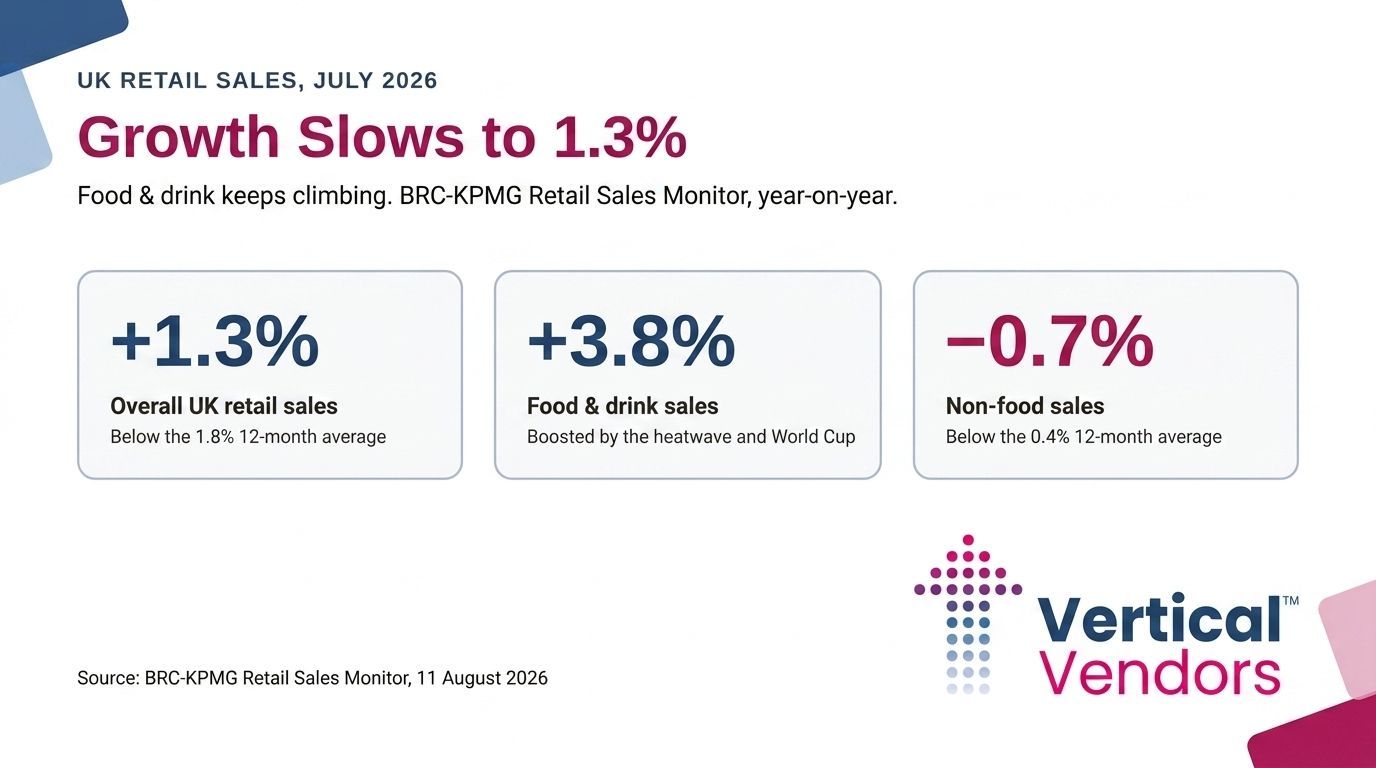
In short: UK retail sales grew just 1.3% year-on-year in July 2026, below the 12-month average of 1.8%, according to the
BRC-KPMG Retail Sales Monitor. Non-food sales fell 0.7%. Food and drink was the exception, up 3.8%, driven by the heatwave and England's World Cup run. When growth this soft depends on short, specific spikes, a shelf that runs empty or a display that collapses costs more than usual.
How Much Did UK Retail Sales Grow in July 2026?
Total UK retail sales grew 1.3% year-on-year in July, comfortably below the 12-month average of 1.8%. Non-food sales fell 0.7%, itself below the 12-month average of 0.4%.
BRC Chief Executive Helen Dickinson summed up the mood:
"Consumer demand has struggled in the heat, leaving retailers facing a challenging start to the second half of the year." IGD's Sarah Bradbury added that shoppers feel a little more confident than earlier in the year, but
"value continues to play a central role in purchasing decisions."
Households are still watching what they spend. That part of the story is not new. What has changed is where the growth is actually coming from.
Why Did Food and Drink Sales Outperform the Rest of Retail?
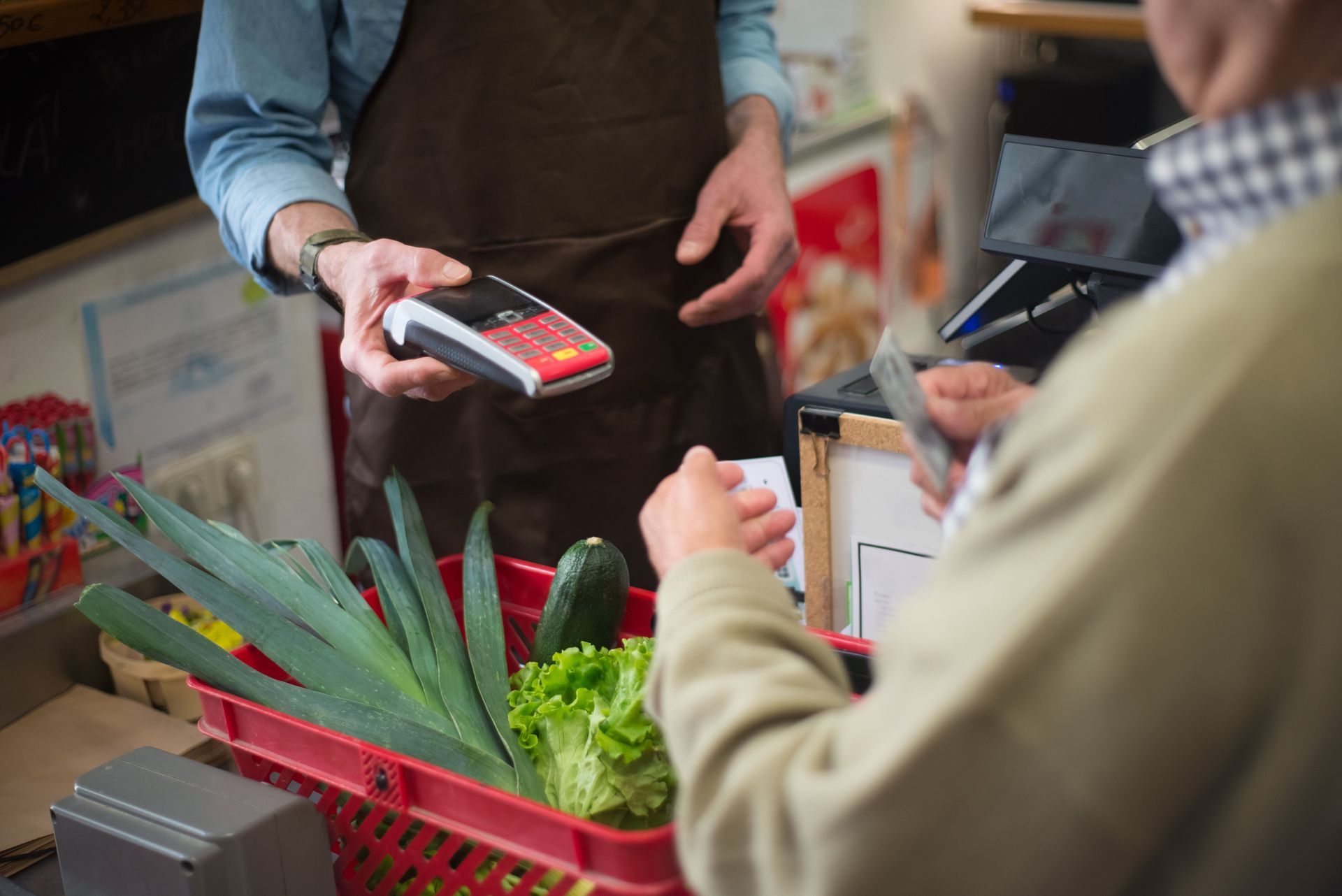
Food and drink sales grew 3.8% in July because two dated, time-limited events did almost all the work: a prolonged heatwave and England's progress deep into the World Cup.
KPMG's Linda Ellett was specific about the cause: "The prolonged warm weather has also aided home entertaining and garden related purchases and, coupled with England's progress to the tail-end of the World Cup, brought a boost to food and drink sales in July." That is not a trend line. It is a spike, tied to two events with a clear start and end date.
Spikes behave differently from broad-based demand. They arrive fast, they do not last long, and if the shelf is not ready, the sale is lost rather than delayed.
What Does Fragile Growth Mean for In-Store Execution?
It means execution during a short demand window now matters more than it has in years. There is no cushion of general footfall to fall back on if a display fails on the one weekend that mattered.
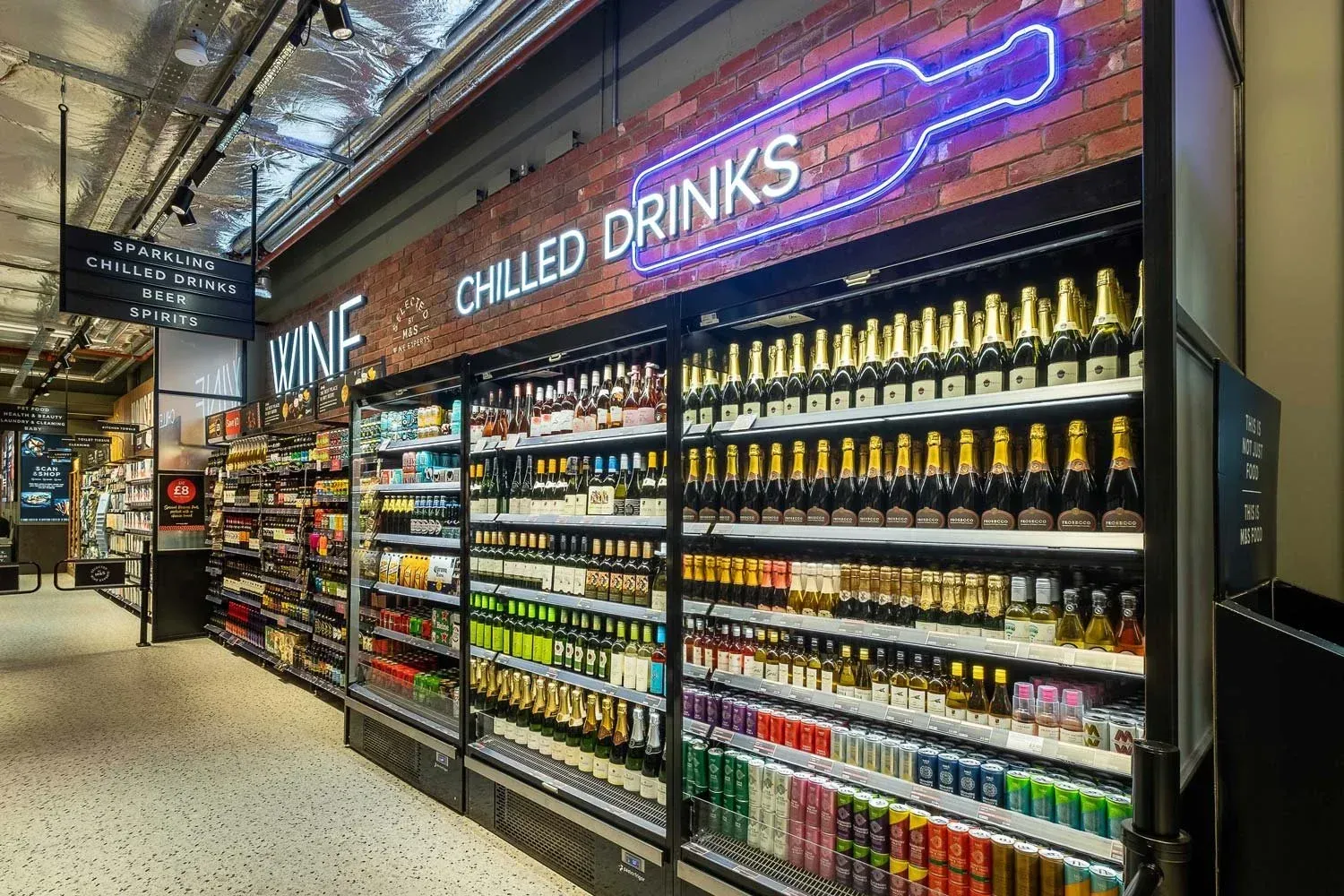
We see this from the factory floor every summer. Retailers doing brisk trade on beer, soft drinks, snacks and barbecue essentials rarely lose sales because demand was not there. They lose sales because the [point-of-sale unit]([Internal Link: suggest relevant VV page]) holding that stock was not built to survive a weekend of heavy handling, heat and constant restocking.
Why Do Cardboard Displays Fail During Peak Trading?
Corrugated displays fail during peak trading because they sag under the weight of multipacks and lose structural integrity in warm, humid store conditions. Once a corner gives way, the whole unit looks untidy, which happens exactly when footfall is highest.
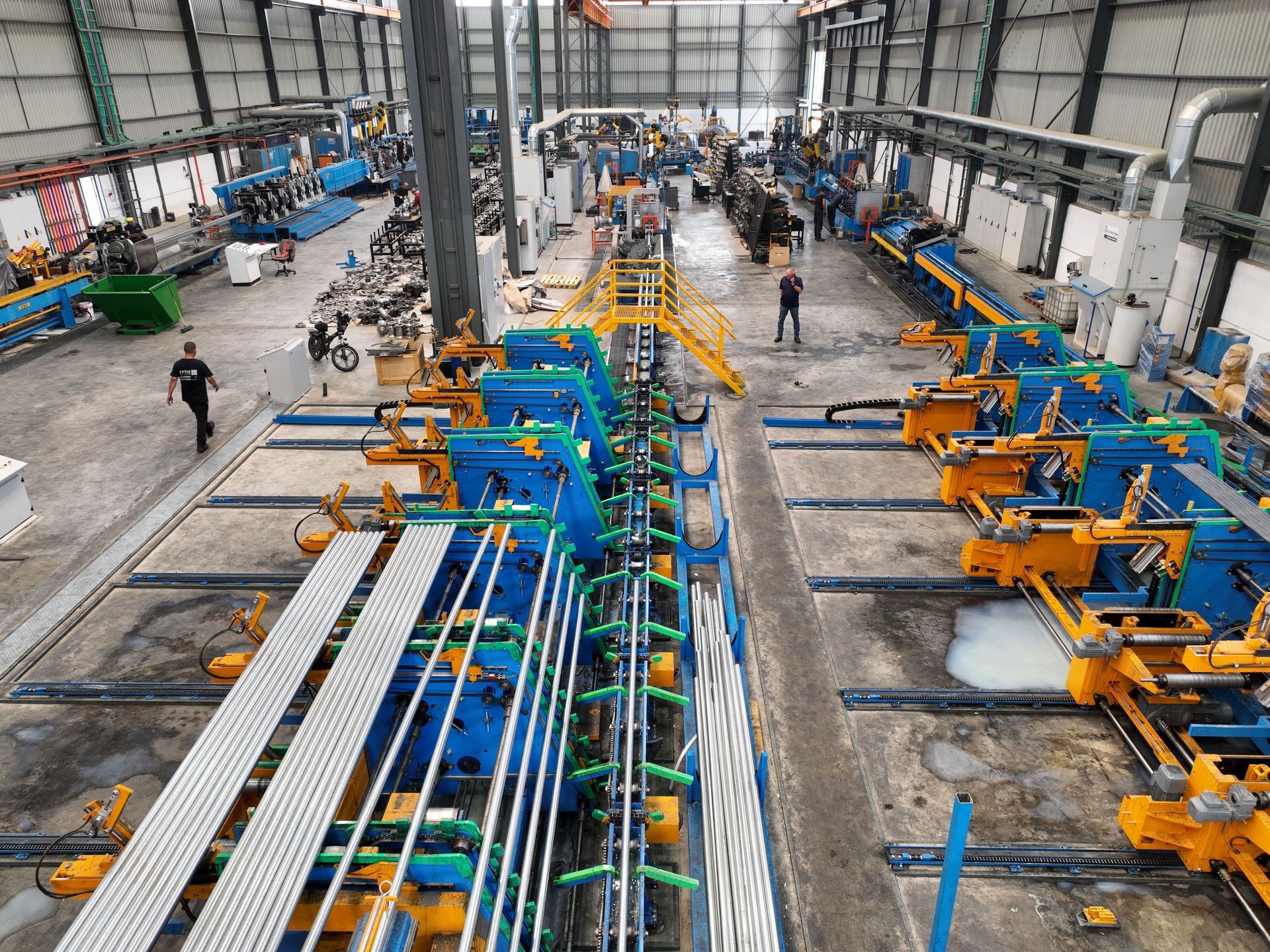
This is a materials problem, not a design one. Cardboard was never engineered to hold 48 hours of continuous, high-turnover retail traffic. Robust sheet steel was.
How Do Vertical Vendors' Steel Displays Solve This?
Our [spring-loaded display systems]([Internal Link: suggest relevant VV page]) are built for exactly this scenario. The patented spring-loaded mechanism advances stock automatically as products are taken, so shelves stay fronted and full without staff intervening every twenty minutes during a Saturday rush.
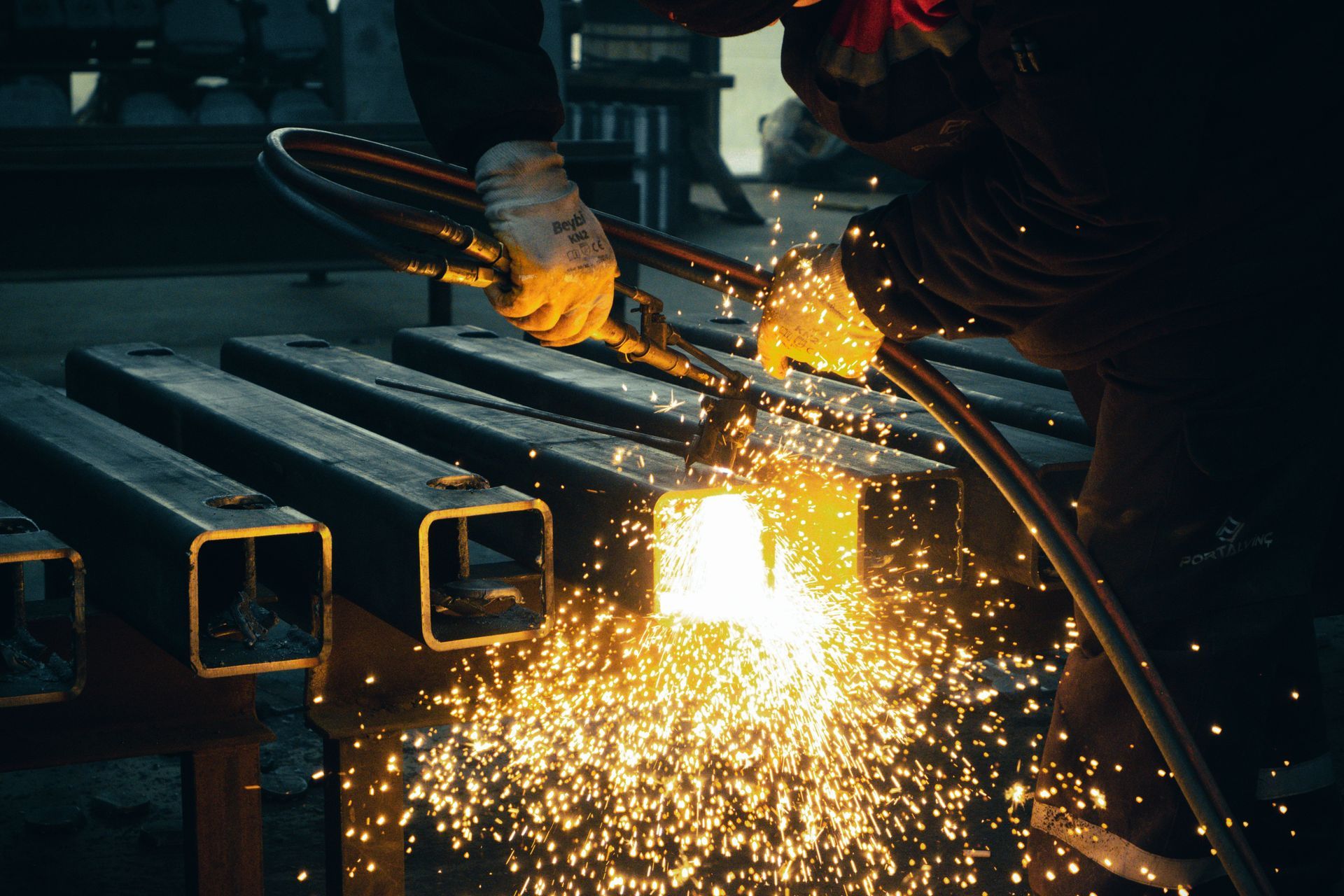
The steel construction holds its shape under sustained weight and heat, and it is made to be reused for years rather than replaced after one busy weekend. Every unit is manufactured at our ISO 9001 certified UK facility, so a display holds up the same way whether you are stocking one store or five hundred.
A brand that gets execution right during the World Cup weekend or the next heatwave is not just capturing a spike. It is outperforming a market growing at 1.3% while non-food sales go backwards nationally.
Frequently Asked Questions
Why did UK retail sales growth slow in July 2026?
Overall UK retail sales grew 1.3% year-on-year, below the 12-month average of 1.8%, as non-food sales fell 0.7% and households stayed cautious with discretionary spending, according to the BRC-KPMG Retail Sales Monitor.
Which retail categories grew despite the slowdown?
Food and drink sales grew 3.8% year-on-year in July 2026, driven by a prolonged heatwave and England's run in the World Cup, both of which boosted home entertaining and garden-related purchases.
How can retailers protect sales during short demand spikes?
By making sure in-store displays can handle sudden, high-turnover trading without collapsing or running empty. Steel, spring-loaded point-of-sale units keep shelves fronted and full automatically, which matters most during the short windows where most of the growth now sits.
Get In Touch Today
If your displays need to survive the next spike, not just look good on the day they are installed, get in touch with our team to talk through what is actually holding your shelf back.
More from the blog